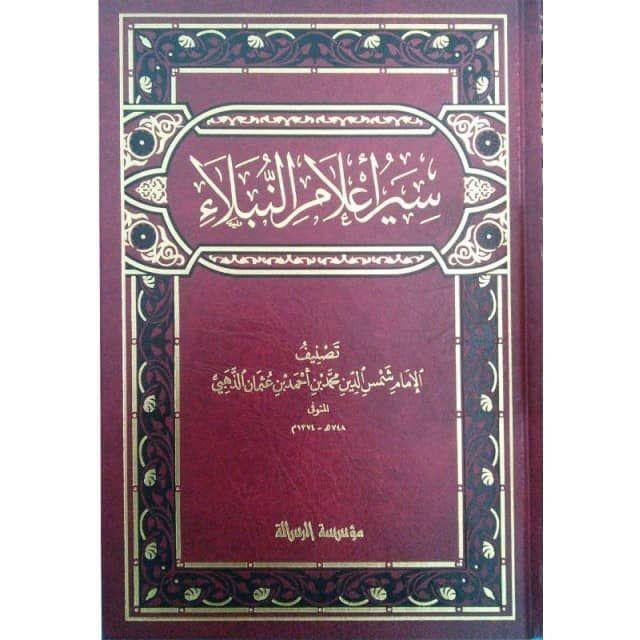
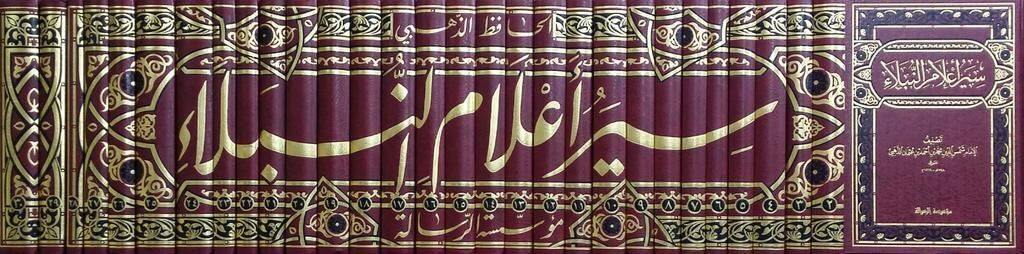
The "Siyar A'lam al-Nubala'" (Biographies of Noble Figures) is a book on biographical science authored by the Hafiz Abu Abdullah Shams al-Din al-Dhahabi.
Book Title: Tarikh al-Ulama al-Nubala (History of Noble Scholars). Tarikh al-Nubala (History of Nobles). Kitab al-Nubala (Book of Nobles). A'yan al-Nubala (Eminent Nobles). Siyar al-Nubala (Biographies of Nobles). Siyar A'lam al-Nubala (Biographies of Noble Figures): This is the most famous, accurate, and complete title, mentioned by Hafiz al-Dhahabi in his own handwriting.
The book "Siyar A'lam al-Nubala'" is considered one of the most enjoyable biographical books for readers and researchers. It is an abridgement of his massive work "Tarikh al-Islam" (History of Islam). He also has other useful and beneficial books on biographies of men, such as his large book "Tarikh al-Islam," "Mizan al-I'tidal fi Naqd al-Rijal" (Balance of Moderation in Criticizing Men), and "Tadhkirat al-Huffaz" (Memorial of the Memorizers), among others. However, the book's classes begin from the era of the Companions up to the author's era. Hafiz al-Dhahabi arranged his book into classes, making it approximately forty classes. This is his method of presenting biographies, and Hafiz al-Dhahabi's books on biographies vary in the number of classes and do not always agree.
Benefits of the Book: The book offers immense benefits, including: gaining knowledge of the biographies of the Companions, the Tabi'in (successors), and subsequent scholars, as well as the biographies of caliphs, political leaders, and even followers of various religions, sects, and philosophers. You will even find discussions about Genghis Khan and other political leaders who influenced Islamic history. The author revised several things he mentioned in his massive book "Tarikh al-Islam." It provides knowledge of some historical events and political occurrences that took place throughout Islamic history up to the author's era. It allows for benefiting from Hafiz al-Dhahabi's knowledge in Islamic sciences, as he discussed many scholarly issues in creed, jurisprudence, exegesis, hadith, and other Islamic sciences. It allows for benefiting from Hafiz al-Dhahabi's rulings on hadiths regarding acceptance, rejection, explanation, and guidance. He is a great scholar of hadith and has ruled on many hadiths in this book. Nature of Biographies in the Book and Principles of Their Selection. Hafiz al-Dhahabi was one of the most prominent scholars of biographies, possessing extensive knowledge, especially in biographies. Therefore, he employed a unique method in selecting biographies and established numerous principles for them. These principles can be summarized as follows: 1 – Scholarly rigor: Al-Dhahabi included all famous and prominent figures and did not include obscure or unknown individuals. 2 – Type of Inclusiveness: He did not limit himself to a specific type of prominent figure; rather, his biographies varied to include many categories of people: caliphs, kings, sultans, judges, ministers, hadith scholars, jurists, literati, physicians, linguists, grammarians, poets, followers of various religions and sects, theologians, philosophers, and a group concerned with pure sciences. 3 – Geographical Inclusiveness: Hafiz al-Dhahabi worked to make his book comprehensive, including biographies of prominent figures from all parts of the Islamic world, from Andalusia in the west to the far east. 4 – Temporal Balance: Hafiz al-Dhahabi tried to balance the number of prominent figures he mentioned throughout the seven-century period covered by the book, so we do not find any preference for one era over another. 5 – Length of Biographies: There is no doubt that Hafiz al-Dhahabi did not write all his knowledge of prominent figures' biographies in this book, as he had extensive knowledge of men's biographies. Therefore, we notice in this book that some biographies are lengthy while others are short. For example, he writes more than a hundred pages about Imam Ahmad ibn Hanbal, while he translates Genghis Khan or Hajjaj ibn Yusuf al-Thaqafi in less than one page. This is, of course, due to the intended benefit from the subject of the biography, as the biography of Ahmad ibn Hanbal contains treasures and rare accounts that are beneficial to mention and learn from.